

Never Do This Before Bed Again
A look at the common evening habits that sleep research and major health organizations link to poorer rest.
If you have ever searched for a rule like “never do this before bed again,” the honest answer is that sleep research points to several habits rather than one single mistake. Late caffeine, evening alcohol, bright screens, heavy meals and an unpredictable bedtime are all repeatedly linked by health organizations and published studies to lighter, shorter or more fragmented sleep. This article walks through each of those habits, what is documented about them, and where the evidence is more mixed, so readers can decide which changes may be worth making in their own evenings.
Why Bedtime Habits Matter for Sleep Quality
Sleep is not simply a pause in the day. Public health bodies such as the U.S. Centers for Disease Control and Prevention and the American Academy of Sleep Medicine describe regular, sufficient sleep as an important part of overall health, and adult guidance commonly cites seven or more hours per night. Falling short is associated in the research literature with problems in mood, attention and long-term health, though the strength and direction of those links vary by condition and study.
What you do in the hours before bed can influence both how quickly you fall asleep and how well you stay asleep. Two biological systems are central to that process. One is the body’s internal clock, or circadian rhythm, which is strongly influenced by light exposure. The other is sleep pressure, a build-up of the drive to sleep during waking hours, which certain substances can temporarily mask. Many of the habits discussed below interfere with one or both of these systems.
Sleep specialists often use the term “sleep hygiene” for the daily habits and bedroom conditions that support good sleep. Guidance typically covers caffeine, alcohol, light, meals, exercise timing and schedule consistency, which are the same areas covered in this article.
Late Caffeine and Nicotine: Stimulants That Linger

Caffeine is the most widely used stimulant in the world, and it works partly by blocking adenosine, a chemical that contributes to feeling sleepy. Its effects do not switch off at the moment the drink is finished. The time it takes the body to clear half of a dose is often cited as roughly five to six hours in healthy adults, although this varies from person to person depending on factors such as genetics, medications and pregnancy.
A well-known 2013 study published in the Journal of Clinical Sleep Medicine tested caffeine taken at different times before bed. The researchers reported that caffeine consumed even six hours before bedtime had measurable negative effects on sleep, including reduced total sleep time. Because caffeine is found not only in coffee but also in tea, cola, energy drinks, chocolate and some pain relievers, an afternoon or evening intake can be larger than people assume.
Nicotine is also a stimulant. Health organizations, including the Sleep Foundation, note that people who smoke are more likely to report difficulty falling asleep and lighter sleep, and that nicotine withdrawal during the night may contribute to awakenings. Anyone considering quitting should discuss it with a health professional, since sleep can be temporarily affected during the process.
Evening Alcohol and Sleep Disruption

A nightcap is a common belief-based sleep aid, and it is easy to see why. Alcohol has a sedating effect, and research summarized by the National Institute on Alcohol Abuse and Alcohol Abuse and Alcoholism’s sleep resources and other medical sources indicates it may help some people fall asleep faster. The problem is what happens afterward.
As the body metabolizes alcohol, sleep tends to become more fragmented. Sleep researchers report that alcohol can suppress rapid eye movement (REM) sleep early in the night and is associated with more awakenings later on. Alcohol also relaxes the muscles of the upper airway, and medical sources note that it can worsen snoring and obstructive sleep apnea in susceptible people. It can also increase the need to urinate overnight, adding further interruptions.
Screens, Bright Light and Your Body Clock
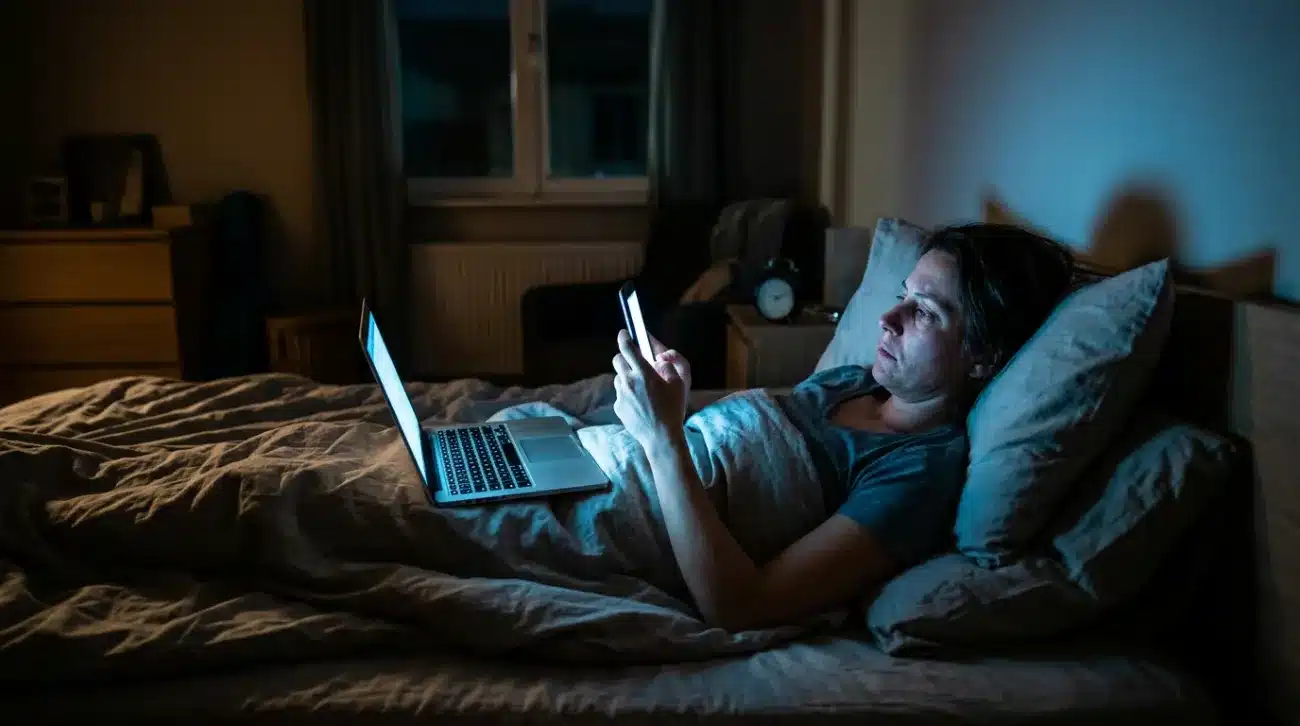
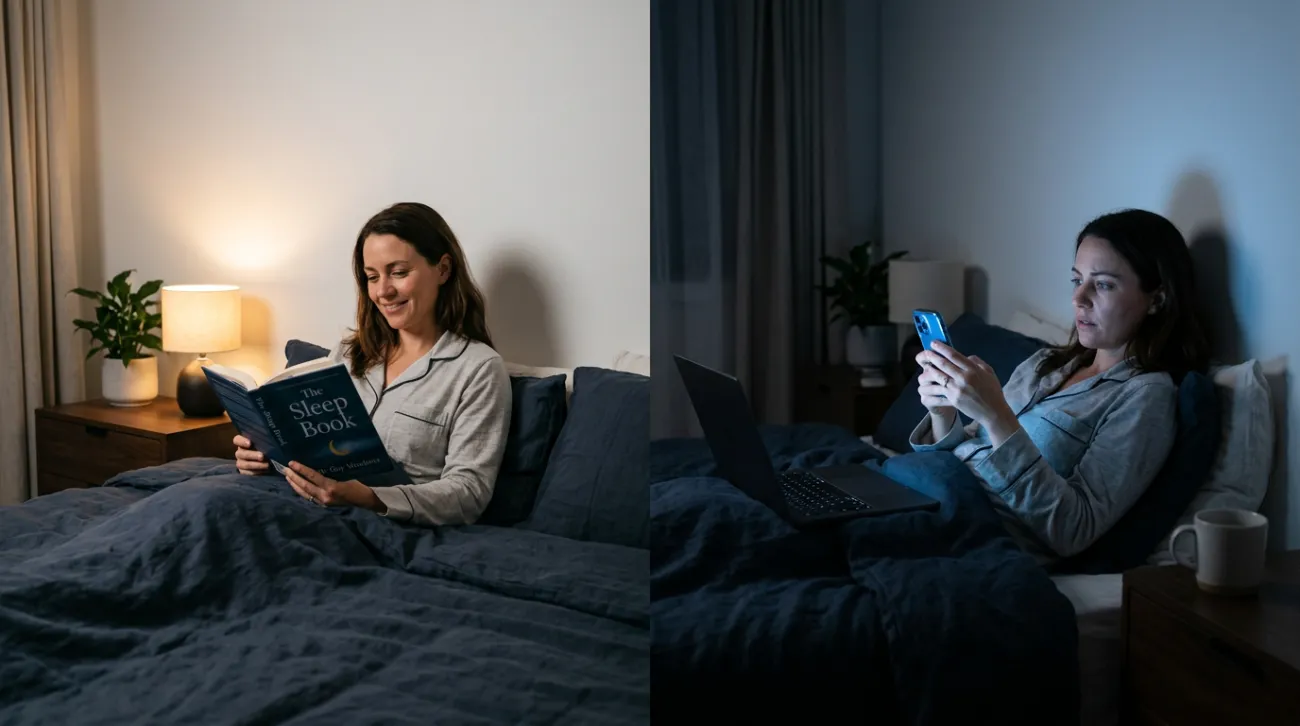
Light is the strongest signal the body uses to set its internal clock. Exposure to light in the evening can suppress melatonin, a hormone associated with the onset of nighttime sleep, and shift the circadian rhythm later. Devices such as phones, tablets and laptops emit light that includes a blue-wavelength component, which has been a focus of this research.
A 2015 study in the Proceedings of the National Academy of Sciences compared reading on a light-emitting e-reader with reading a printed book in the hours before bed. The authors reported that e-reader use was associated with slower melatonin rise, a delayed body clock and less evening sleepiness, along with reduced alertness the next morning. It was a small, controlled laboratory study, so it does not settle every question about everyday device use.
Light is only part of the story. Content matters too. Checking work email, following stressful news or scrolling social media can be mentally activating, which may make it harder to wind down regardless of brightness. Dimming lights and putting screens away for a period before bed is a widely repeated recommendation from sleep organizations. A small 2022 study in the same journal also reported that sleeping with moderate room light was associated with changes in heart rate and blood sugar regulation the following morning in young, healthy adults, which is one reason a dark bedroom is often advised.


